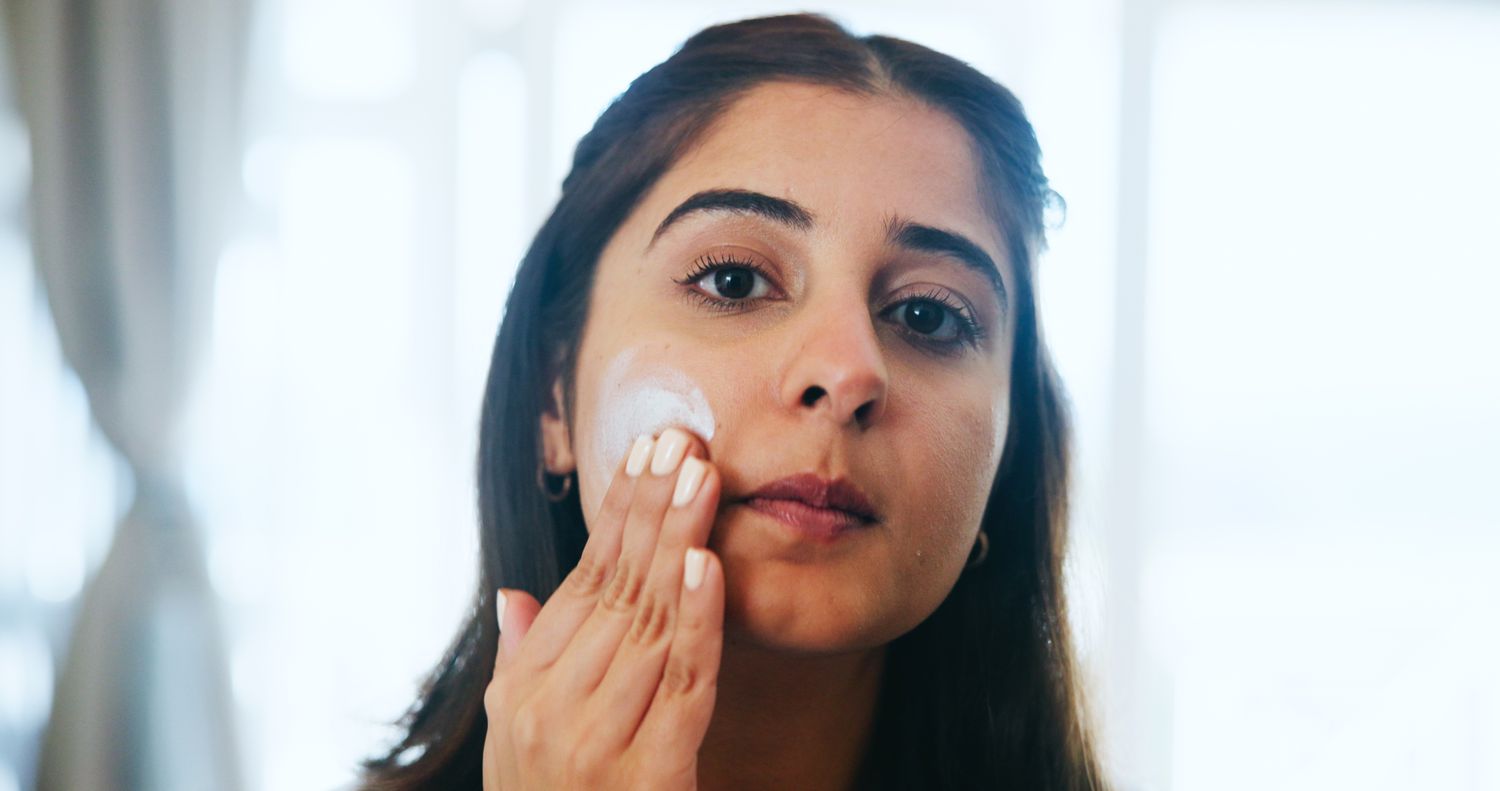
Moisturizer supports skin health by maintaining hydration, while sunscreen serves as a vital barrier against environmental damage. Using both daily, in the proper order, helps preserve your skin's integrity and long-term resilience.
What’s the Correct Order for Applying Moisturizer and Sunscreen?
For most people, the American Academy of Dermatology (AAD) advises applying sunscreen as the final step in your morning skincare routine.
- Applying moisturizer before sunscreen allows your moisturizer to penetrate directly into your skin, preserving its natural moisture balance.
- Furthermore, layering sunscreen over moisturizer ensures that nothing interferes with the protective barrier your sunscreen provides from the sun’s UV radiation.
- Applying sunscreen over moisturizer aligns with dermatologists’ advice to layer skincare products from thinnest to thickest.
During the day, when sunscreen is necessary, this involves using skincare products in the following order:
- Cleanser
- Toner
- Spot treatments
- Serums
- Eye cream
- Moisturizer
- Sunscreen
- Makeup
How to Layer Based on the Kind of Sunscreen You Use
While the general rule is to apply sunscreen over a thin layer of moisturizer, you may benefit from a different approach depending on the type of sunscreen you use. Generally, sunscreens can be classified as one of the following types:
- Mineral sunscreens, also known as physical sunscreens, typically contain zinc oxide and/or titanium dioxide, which form a physical barrier to the sun’s UV rays. Dermatologists often suggest mineral sunscreens for people with sensitive skin.
- Chemical sunscreens contain chemicals like avobenzone or octinoxate that absorb the sun’s rays by penetrating your skin.
- Hybrid sunscreens contain one or more active ingredients that combine the benefits of both chemical and physical sunscreens.
Related Stories
9 Calamine Lotion Uses (and When Not to Use It)
Tea Tree Oil for Hair: 5 Benefits and Shampooing Instructions
Layering Tips for Mineral vs. Chemical Sunscreens
For enhanced protection, consider the following layering order based on the type of sunscreen you use:
- Mineral sunscreen over moisturizer: Since mineral sunscreen provides a physical barrier to UV rays, you may achieve optimal protection by applying it directly to your skin, allowing it to reflect the sun.
- Chemical sunscreen under moisturizer: Since chemical sunscreens work after they are absorbed into your skin, they may provide better protection if applied directly to your skin's surface before moisturizer, allowing for adequate absorption.
Both types of sunscreens have pros and cons. Consult a dermatologist or healthcare provider for personalized advice on the best sunscreen type and layering order with moisturizer, tailored to your specific skin type.
Are There Benefits Regardless of Layering Order?
Evidence also suggests that using an appropriate sunscreen may provide benefits regardless of the order in which it is applied.
- In one study, researchers used UV reflectance analysis to observe whether applying moisturizing cream before or after sunscreen impacted the sunscreen's effectiveness.
- The results showed that a moisturizing cream applied shortly before or after the sunscreens did not alter the efficacy of the low- and high-protection sunscreens used in the study.
How Do You Choose a Sunscreen?
No matter what type of sunscreen you use, the AAD advises choosing products with the following properties:
- Broad-spectrum protection (protects against UVA and UVB rays)
- SPF 30 or higher
- Water resistance
Generally, dermatologists' overwhelming message is that the best sunscreen is the one you use regularly because consistent use is key to UV protection.
Tips for Using Combination Moisturizer with SPF Products
- Using a moisturizer with SPF may save time, but it often may offer less protection than dedicated sunscreens, making it unsuitable for extended sun exposure.
- If you're considering a combination product, ensure it follows the AAD guidelines for sunscreens.
- To replace sunscreen, a combination product should have an SPF of 30 or higher, broad-spectrum (UVA and UVB) coverage, and water-resistant properties.
- If you choose a combination moisturizer/sunscreen, use enough product for proper protection.
- Sunscreen is most effective when applied generously and consistently.
- Reapply sunscreen every two hours in the sun and after swimming or sweating.
- However, anecdotal evidence suggests that people often underapply combination products because they dislike the process of layering moisturizer every two hours.